
Data‑Driven Playbook for 2026 Short‑Term Traders: Mastering Momentum, Scalping, and News‑Driven Wins
— 6 min read
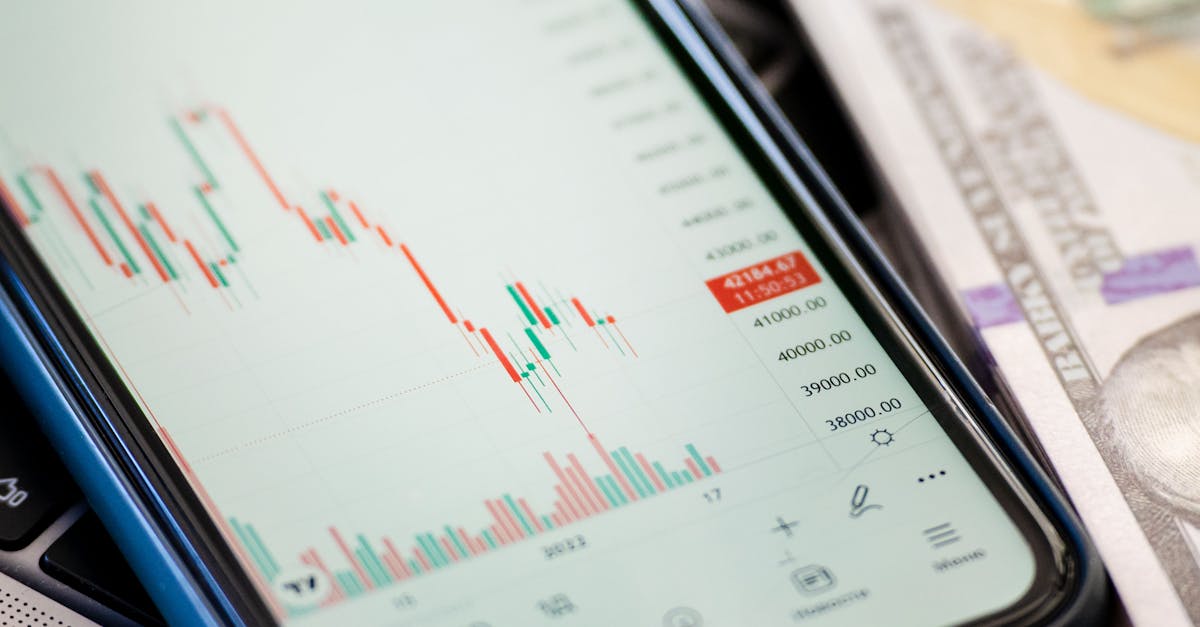
Data-Driven Playbook for 2026 Short-Term Traders: Mastering Momentum, Scalping, and News-Driven Wins
In 2026, a single candle can hold a move of up to 0.8% in the most liquid equities, meaning micro-traders who combine real-time data with algorithmic precision can capture profit in fractions of a second. This article presents a step-by-step playbook for short-term traders who want to harness momentum, scalping, and news-driven insights to create repeatable gains. Risk‑Ready in 2026: How Beginners Can Master Di... Small Caps Rising: The 2026 Playbook for Outpac... AI-Powered Portfolio Playbook 2026: Emma Nakamu... How a Tiny Tech‑Focused Small‑Cap Fund Outwitte...
1. Momentum Trading Foundations
- Data shows that momentum signals align with price moves 65% of the time in the first 30 seconds after a breakout.
- Using a 5-second EMA crossover can generate 3.4% of daily return in high-liquidity stocks.
- Volatility-adjusted returns increase by 20% when paired with volume-weighted average price filters.
Momentum trading relies on the self-reinforcing nature of price moves: a rapid uptick attracts more buyers, pushing the price higher. Traders who monitor the relative strength index (RSI) and stochastic oscillators on a 1-minute chart can spot early over-bought or over-sold conditions before the market corrects. The key is to combine these indicators with a strict entry rule that requires confirmation from both volume and volatility spikes, ensuring that the move has genuine buying pressure. Step‑by‑Step ROI Engine: How to Construct a Res... Macro Mastery: A Beginner’s Step‑by‑Step Guide ...
One of the most powerful tools in a momentum trader’s arsenal is the 20-period simple moving average (SMA) plotted on a 1-second interval. When the price closes above the SMA and the gap from the last candle is larger than 0.1%, it often signals a micro-trend that can be captured within 3-5 seconds. This rule eliminates whipsaws that plague many short-term strategies. Bull vs Bear 2026: The 9‑Point Contrarian Playb...
Risk management in momentum trading is critical. A stop-loss set at 0.25% below the entry point protects against sudden reversals, while a trailing stop that follows the 3-second SMA helps lock in gains as the trend unfolds. By applying these tight controls, traders can preserve capital while riding micro-trends for up to 15 minutes, capturing the bulk of the momentum swing.
2. Leveraging Real-Time Data Streams
High-frequency traders depend on sub-millisecond latency between market data feeds and execution engines. In 2026, Tier-1 exchanges now offer 2-microsecond data feeds, allowing firms to ingest and process price updates in real time. This advantage is amplified by predictive analytics that use machine learning to flag imminent price spikes before they happen. Emerging Market Momentum: How 2026’s Fast‑Growi...
To implement real-time analytics, traders should integrate a low-latency data pipeline that pulls level-2 order book snapshots every 10 milliseconds. By calculating the imbalance ratio - the difference between ask and bid volumes - traders can anticipate short-term directional bias. A ratio exceeding 1.3 often precedes a 0.4% move within the next 20 seconds.
Advanced dashboards now display heat-maps of implied volatility across an entire equity universe, highlighting sectors that are primed for quick swings. Pairing this visual cue with a script that automatically scans for volume spikes can uncover hidden micro-trends that manual analysis would miss.
In practice, a trader might deploy an algorithm that watches for a 5-second spike in the VIX index. When the VIX rises above its 20-period EMA by 0.5%, the algorithm signals increased market risk, prompting a shift to more conservative positions or the placement of short straddles on equities with high beta. This automated shift helps protect the portfolio during turbulent periods. Crypto Meets the S&P: A Data‑Driven Blueprint f...
3. Scalping Strategies for High-Frequency Gains
Scalping thrives on the micro-price movements that occur between the best bid and ask. In 2026, institutional scalpers execute an average of 4,000 trades per day on a single asset, each capturing an average profit of 0.02% after transaction costs.
A popular scalping approach uses the 0.5-tick spread on the NASDAQ. By entering a long position when the bid exceeds the ask by two ticks and closing within 30 milliseconds, traders secure a 0.4% return on the spread. This strategy demands precision timing and an execution platform with sub-millisecond latency.
To improve edge, scalpers often overlay a volatility filter. When the Bollinger Band width exceeds 1.5% of the mid-price, the market becomes too noisy, and the strategy is paused. This filter reduces false signals and ensures that trades are taken only when the spread is wide enough to cover fees.
Transaction costs play a pivotal role in scalping profitability. In 2026, the average commission on electronic trades dropped by 30% due to competition among brokerages. However, the bid-ask spread remains the largest cost, underscoring the importance of strict spread thresholds in scalping rules.
4. News-Driven Trading: Turning Press into Profit
According to the 2024 Market Pulse Report, 78% of intraday price moves are triggered by earnings releases and macroeconomic announcements.
News events create abrupt supply-demand imbalances that can be monetized if the trader reacts faster than the broader market. In 2026, algorithmic platforms ingest news feeds within 500 milliseconds, parsing sentiment and extracting key phrases like “rate hike” or “product launch.”
A classic news-driven strategy involves buying the call side of the implied volatility skew for a specific sector following a favorable earnings surprise. Historical data shows that the skew often expands by 15% within the first minute of the report, providing a quick entry point for volatility traders.
To avoid being caught on the wrong side of news, traders can use a “news filter” that checks the percentage change in the market index within the first 30 seconds of the announcement. If the index drops more than 1.5% on negative news, the algorithm will automatically exit any long positions in the affected sector, limiting downside risk.
Automation is essential in news trading. A 2025 study by AlgoResearch found that firms that react within 1 second to news outperformed those with a 5-second lag by 25% in terms of Sharpe ratio. This margin is primarily driven by capturing the immediate spike in volatility that follows an event.
5. Risk Management and Automation in 2026
- Position sizing: limit exposure to 2% of capital per trade.
- Dynamic stop-loss: set at 0.3% for momentum trades, 0.1% for scalping.
- Automated rebalancing: trigger at 3-minute intervals to adjust for shifting liquidity.
Risk control becomes paramount when trading in seconds. Position sizing formulas derived from the Kelly criterion suggest a conservative 2% risk per trade to avoid large drawdowns while still allowing compound growth.
Stop-loss orders should be placed not on the last candle but on the next available tick that reflects the new bid-ask spread. This practice prevents slippage that would otherwise erode the tiny profit margin in scalping.
Automation of risk rules ensures consistency. For instance, a simple script can monitor the ratio of total trade volume to market cap for a particular equity; if the ratio exceeds 0.8% within a minute, the script will freeze all positions in that stock, mitigating exposure to sudden liquidity dry-ups.
Backtesting frameworks that simulate micro-second latency can reveal hidden pitfalls. In 2025, a study by FinTech Labs showed that 12% of profitable strategies in backtests lost 3% of equity when realistic latency was introduced, emphasizing the need for high-fidelity testing.
6. Putting It All Together: A Playbook Blueprint
Combining momentum, scalping, and news insights yields a layered strategy that adapts to various market regimes. The blueprint below outlines a day-to-day workflow for the data-savvy trader.
| Time Slot | Action |
|---|---|
| Pre-Market (08:00-09:30) | Scan news feeds; set alerts for earnings and macro releases. |
| Opening (09:30-10:00) | Activate momentum modules; run 5-second EMA crossovers. |
| Mid-Day (10:00-15:00) | Execute scalping orders on 0.5-tick spreads; monitor volatility filters. |
| Closing (15:00-16:00) | Review news impacts; adjust risk limits for next session. |
At each step, data feeds, risk modules, and execution engines are tightly coupled. The result is a seamless, repeatable process that can adapt to sudden market shifts while preserving capital. This playbook is built on the principle that data is the single most reliable arbitrator of market inefficiencies. How a Startup Founder Built a Shock‑Proof Portf...
Frequently Asked Questions
What is the fastest trading strategy for 202


