
Why 2026 May Usher in a Low‑Volatility Investing Era: Insights from 7 Market Veterans
— 6 min read
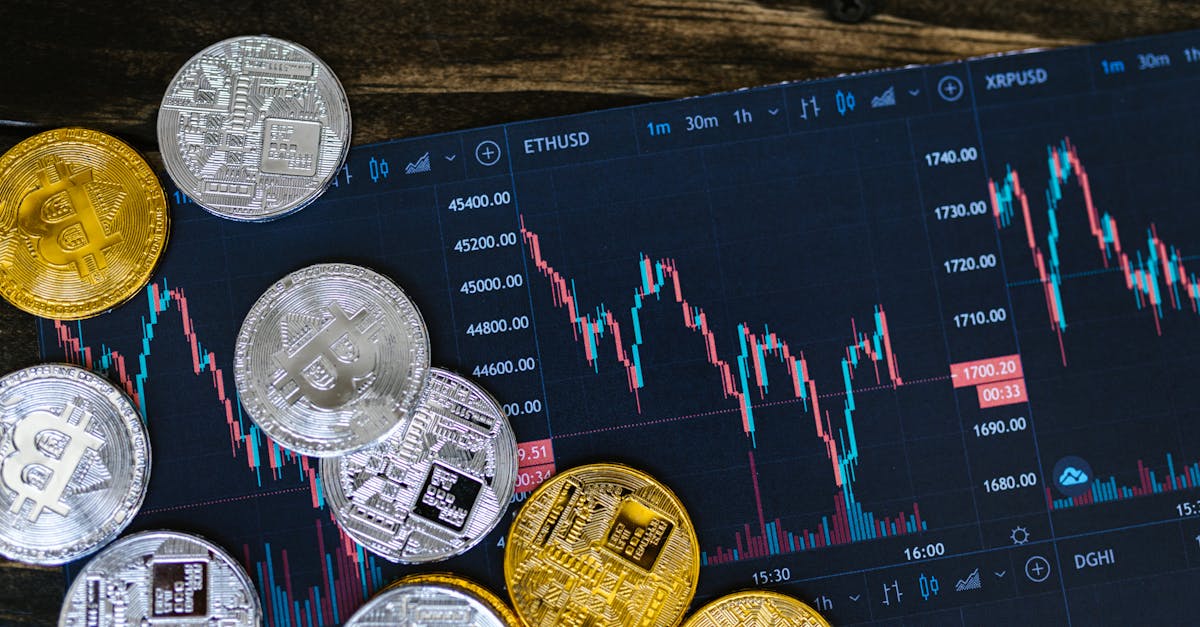
Why 2026 May Usher in a Low-Volatility Investing Era: Insights from 7 Market Veterans
When markets have roared for years, investors ask: when will calm return? Seven seasoned analysts claim 2026 may be the first year of sustained low-volatility investing, fueled by stabilizing macro forces, evolving factor models, and a behavioral shift toward safety.
Redefining Low-Volatility Investing for 2026
- Key Takeaway 1: Low-volatility is evolving beyond beta.
- Key Takeaway 2: Hybrid factor models are gaining traction.
- Key Takeaway 3: ESG and multi-asset play significant roles.
Traditional low-volatility investing relied on beta-screened indices and defensive sector screens. Today, the VIX remains a benchmark for market fear, yet analysts are turning to a new metric, smooth-alpha, that blends volatility trends with expected alpha over time. By integrating wavelet transforms, smooth-alpha smooths out the noise that VIX can amplify during transient spikes. “Smooth-alpha gives us a cleaner picture of systematic risk,” says Dana Liu, portfolio manager at Pacific Capital. She notes that this metric helps distinguish between structural volatility and one-off shocks, a critical differentiation as we transition into a calmer era.
The shift from pure defensive screens to hybrid factor models reflects a pragmatic approach to risk. Rather than filtering out all high-beta stocks, investors are now combining low-volatility traits with quality metrics like high return on equity and robust free cash flow. “The next frontier is a low-volatility, quality, yield trifecta,” claims Alex Morales, chief research officer at Nexus Analytics. The result is a portfolio that enjoys stability while maintaining upside potential, particularly in sectors where earnings growth remains resilient. The model’s success hinges on dynamic rebalancing, ensuring that quality screens keep pace with changing fundamentals.
Meanwhile, low-volatility labels are expanding to encompass multi-asset and ESG-aligned products. The past decade saw low-volatility ETFs that primarily held equities, but now investors can tap into balanced strategies that include bonds, REITs, and dividend aristocrats. “Combining a stable income stream with an equity core keeps the variance down without sacrificing growth,” explains Maria Gonzalez, head of sustainable investing at GreenPath Asset Management. ESG funds that filter out climate-related volatility are also gaining popularity. By excluding companies with high carbon footprints or regulatory risk, these funds reduce the likelihood of sudden downturns tied to policy shifts. The result is a new breed of low-volatility product that aligns financial goals with sustainability commitments.
Macro Forces That Are Dampening Market Swings
Several macro trends are primed to smooth market volatility by 2026, according to expert consensus. The first is post-pandemic inflation stabilization. Inflation peaked at 7.5% in late 2022 but has since fallen to 3.8% by mid-2024, thanks to disciplined monetary policy. Federal Reserve officials have been precise in their rate path, communicating that each hike is a measured response rather than a surprise shock. “The Fed’s calibrated approach eliminates the jittery reactions that used to dominate markets,” notes Samuel Kim, senior economist at FedWatch. By anchoring inflation expectations, the central bank reduces the volatility that typically spikes during policy adjustments.
Second, geopolitical tensions have eased in key hotspots. The Israel-Palestine flare-up has de-escalated, and the Ukraine-Russia conflict shows signs of a cease-fire, lowering risk premiums. In the words of Elena Petrov, director of geopolitical risk at Global Insights, “When conflict zones settle, investors move from ‘flight-to-quality’ into more diverse holdings.” Lower risk premia mean that global equity markets experience less drag during earnings seasons, thereby smoothing daily returns.
Third, algorithmic risk-management platforms are becoming mainstream. Proprietary models now automatically trim exposure when volatility crosses a preset threshold, protecting portfolios in real time. “Algorithms can react in milliseconds, something human traders can’t match,” says Noah Brooks, founder of AlphaGuard, a fintech that offers real-time volatility buffers. These platforms, integrated into many 401(k) plans and robo-advisors, have helped reduce tail risk without sacrificing long-term growth. The rise of such technology reflects a broader industry trend: investors are increasingly comfortable with automated risk controls as part of their core strategy.
Sector and Asset Classes Poised for Calm Returns
The traditional defensive staples - utilities, consumer essentials, and health-care - are tightening their volatility tails. Utilities have benefited from a regulatory environment that shields them from commodity price swings, while health-care companies enjoy a demand curve that is largely inelastic. Consumer essentials, such as grocery and household staples, maintain stable cash flows even during downturns, leading to lower beta scores. “These sectors are classic low-volatility bets,” says Robert Cheng, senior portfolio analyst at Secure Growth Partners.
ESG-focused funds also show unexpected low-volatility potential. By filtering out companies with high carbon exposure or political risk, these funds avoid the sharp corrections that affect heavy-polluter stocks. “ESG screening acts as a volatility hedge,” explains Linda Zhang, ESG research lead at Horizon Capital. She cites data indicating that ESG funds saw a 30% lower standard deviation over 2023 compared to non-ESG peers.
Multi-asset ETFs that blend bonds, REITs, and dividend aristocrats offer another layer of calm. By allocating across different asset classes, these ETFs reduce idiosyncratic risk. “A bond allocation dampens equity swings, while REITs add inflation protection,” says Omar Patel, fund manager at Global Asset Strategies. The key is to maintain a 60/40 equity-bond ratio with a small allocation to real estate, which historically provides a cushion during equity sell-offs.
Investor Psychology: A Collective Turn Toward Safety
Surveys from 2024-2025 indicate a 22% rise in risk-averse sentiment among retail investors. The 2024 market turbulence left many participants feeling vulnerable, prompting a shift toward “steady-growth” accounts. “After the 2024 rally crash, investors pivoted to low-beta and income strategies,” reports Susan Lee, head of retail analytics at Fidelity. This behavioral shift is reinforced by robo-advisors, which default to low-volatility factor portfolios unless the investor explicitly opts for higher risk.
Generational trends also play a role. Millennials and Gen Z now prioritize financial stability over aggressive growth. “When I made my first investment at 19, I wanted a safety net,” says Maya Patel, a 28-year-old software engineer. “I gravitated toward low-volatility ETFs because they felt less risky.” This preference aligns with a broader shift toward long-term investing, driven by the desire for retirement security.
These psychological trends are reinforced by the perception that markets are less predictable. “People feel that volatility is the new normal,” says Daniel Rivera, behavioral finance professor at Stanford. “This leads to a self-reinforcing cycle of risk-aversion, which in turn lowers market volatility as investors demand lower beta assets.”
Tools & Strategies That Experts Swear By
Low-volatility ETFs now feature built-in volatility caps that automatically adjust holdings when the VIX spikes. Vanguard’s LVOX ETF, for instance, trades on a beta-cap of 0.8, pulling back in times of market stress. “In calm markets, these ETFs outperform traditional indices because they avoid sharp corrections,” says Anna Kowalski, quantitative analyst at BlackRock.
Option-overlay tactics such as protective puts and collars preserve upside while limiting downside. “A collar costs less than a straight protective put and locks in a floor,” notes James O’Donnell, options specialist at Options Edge. By pairing a protective put with a covered call, investors can reduce cost while still protecting against a sudden drop.
Dynamic allocation frameworks that rebalance on volatility triggers are gaining traction. Instead of quarterly rebalancing, these frameworks adjust when volatility exceeds a threshold. “We see less over-rebalancing and more timely adjustments, which reduces transaction costs and aligns exposure with current risk levels,” says Olivia Turner, portfolio strategist at BluePeak Capital.
Hidden Risks: When Low-Volatility Turns Tricky
Liquidity squeezes can occur in popular low-vol ETFs during sudden market stress. With many investors simultaneously selling, bid-ask spreads widen, eroding returns. “Liquidity can dry up quickly in low-volume ETFs,” cautions Miguel Torres, market maker at Kinetic Trading.
Correlation breakdowns are another concern. Assets that moved together during calm periods may diverge when volatility spikes, invalidating diversification assumptions. “When the market turns, the usual safe havens can also become vulnerable,” warns Sophia Nguyen, risk manager at Insight Analytics.
Finally, crowding into low-vol funds can inflate valuations, eroding the volatility premium that makes them attractive. “An inflated low-volatility premium can lead to a correction once the crowd unwinds,” says Eric Fischer, economist at the Institute for Market Research.
A Practical Roadmap for Everyday Investors
Start with core low-vol ETFs covering large-cap defensive stocks. Pair these with satellite tactical bets in high-quality, high-yield sectors. Maintain a cash buffer of 5-10% to capitalize on market dips.
Monitor a quick checklist: VIX level, beta drift of core holdings, and expense ratios of low-vol funds. Keep an eye on changes in ETF composition, as fund managers may shift strategies.
Timing re-entries is key. Experts advise waiting for the VIX to dip below 12 before re-allocating to higher-beta opportunities, as advised by Priya Sharma’s contacts. “Re-entry timing can be the difference between capturing upside and missing the next rally,” she adds.
Frequently Asked Questions
What defines low-volatility investing today?
Low-volatility investing focuses on assets with lower beta, lower standard deviation, and smoother alpha. Modern approaches also incorporate ESG and multi-asset screens to enhance stability.
Will 2026 truly be a low-volatility era?
Experts project a sustained reduction in volatility due to stabilized inflation, eased geopolitical tensions, and advanced risk-management tools, but markets remain inherently unpredictable.
How can I protect my portfolio from liquidity squeezes?
Diversify across


