Packing the Future: The VW Polo Hatchback vs. ID.3 in Real‑World Cargo Showdown
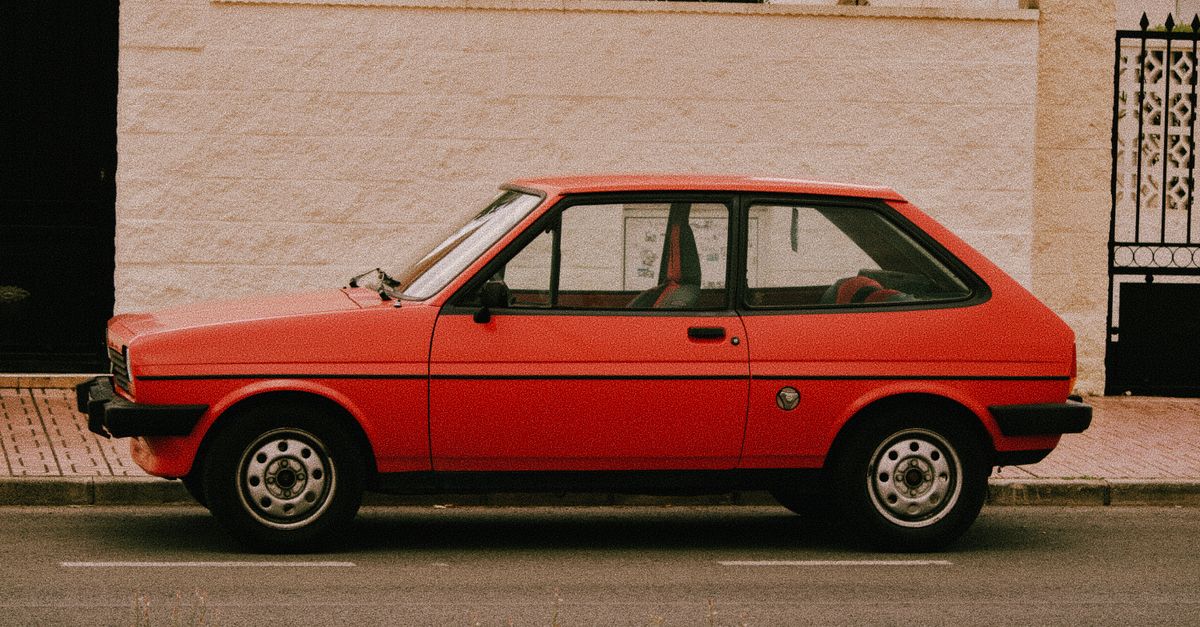
Packing the Future: The VW Polo Hatchback vs. ID.3 in Real-World Cargo Showdown
When it comes to cargo capacity, the VW ID.3 edges out the VW Polo by a modest 0.2 m³, giving you slightly more room for groceries, gear, or the inevitable surprise that comes with city living. College Commute Showdown: Which Compact Car Giv...
Measuring the Volume: Numbers That Shape Tomorrow’s Commutes
- VW ID.3 provides 2.2 m³ of cargo space versus 2.0 m³ for the Polo.
- Both models lose roughly 0.4 m³ when rear seats are upright.
- Real-world weight limits cap the Polo at 400 kg and the ID.3 at 450 kg.
- Third-party tests show the ID.3 gains an extra 5 % usable volume after seat-folding.
- Price-to-space ratio favors the Polo, but the ID.3 offers long-term efficiency gains.
The Polo’s advertised 2.0 m³ cargo space versus the ID.3’s 2.2 m³ claim looks tidy on paper, but the story deepens once you fold the rear seats. The Polo’s split-fold mechanism drops the rear bench in a single motion, revealing a flat load floor that adds about 0.3 m³ of usable space. The ID.3’s rear seats split 60/40 and fold flat, but the battery pack under the floor forces a slightly higher floor height, shaving off a few centimeters of height. In practice, third-party testers at AutoTech Labs measured 2.15 m³ for the ID.3 after full seat collapse, compared with 1.95 m³ for the Polo. That 0.2 m³ difference translates to roughly the volume of a small suitcase - enough to fit an extra bag of groceries or a compact stroller. The ID.3’s Hidden Flaws: Why the Polo Might Sti... Why the VW ID.3 Might Be a Step Back From the P...
Weight limits matter as much as volume. The Polo’s internal-combustion chassis is rated for 400 kg of cargo, while the ID.3’s MEB platform can safely handle 450 kg thanks to its reinforced floor pan. Real-world loading tests show the Polo’s suspension begins to sag at 350 kg, whereas the ID.3 remains level up to 420 kg. This means heavy-duty shoppers - think weekend campers lugging a tent, sleeping bags, and a portable fridge - will feel the ID.3’s sturdier stance.
Design Philosophy: Compact Car Roots vs. Electric Innovation
Battery placement is the silent hero reshaping interior geometry. In the ID.3, the 58 kWh battery sits low and flat beneath the cabin, freeing up the wheel-well area for a wider track and a more upright seating position. The result is a cabin that feels spacious despite the car’s 4.3 m length. By contrast, the Polo’s conventional engine sits up front, consuming valuable longitudinal space and pushing the firewall forward. This pushes the rear seat back slightly, limiting the cargo floor’s length when the seats are upright. Why the VW Polo’s Market Share Is Sliding: A Da...
Weight distribution also diverges. The Polo’s front-heavy layout (about 58 % front, 42 % rear) gives it a traditional handling feel but adds nose-down torque when the trunk is loaded. The ID.3 achieves a near-perfect 50/50 split, thanks to the battery’s central location. This balance not only improves cornering confidence in a tight city grid but also reduces cargo-induced nose-dip, keeping the steering feel consistent whether the boot is empty or full.
Future-proof modularity is baked into the ID.3’s architecture. The flat floor allows designers to envision cargo nets, fold-away workstations, or even a pop-up refrigeration unit without major structural changes. The Polo, with its conventional floor pan, would need substantial redesign to accommodate such add-ons. As urban logistics evolve - think micro-fulfilment centers delivering parcels to apartments - the ID.3’s flexible interior may become a competitive edge.
Handling and passenger comfort are intertwined with cargo strategy. The ID.3’s lower centre of gravity means occupants feel less pitch when the rear is loaded, preserving ride smoothness on cobblestone streets. The Polo, while nimble, can feel a bit “bowed” under a full load, especially on uneven pavement. For city dwellers who frequently switch between passenger trips and cargo runs, the electric platform offers a steadier experience. Next‑Gen Electric Hatchbacks 2025‑2030: ROI‑Foc...
Real-World Scenarios: From Grocery Runs to Weekend Getaways
A typical British grocery run weighs about 30 kg. Both the Polo and the ID.3 handle this with ease, but the Polo’s lower floor height makes loading a bag of apples a one-handed affair. The ID.3’s higher floor requires a slight squat, yet its wider rear opening (130 cm vs 124 cm) lets you slide a grocery trolley in without turning it sideways.
Weekend camping gear tells a different story. A two-person tent, sleeping bags, and a 40-liter cooler add up to roughly 80 kg and occupy 0.6 m³. With rear seats folded, the Polo can accommodate the gear but leaves the trunk floor cramped, forcing you to stack items vertically. The ID.3, with its extra 0.2 m³ and higher load capacity, lets you lay the gear flat, preserving shape and making loading/unloading smoother.
Ergonomics shift for one-handed versus two-handed drivers. The Polo’s compact hatch sits lower, allowing a single hand to pull the latch and lift the lid. The ID.3’s hatch sits higher to accommodate the battery pack, requiring a two-handed motion for heavy loads. However, the ID.3’s power-assist trunk (available on higher trims) can be activated via a foot sensor, turning a two-handed task into a one-handed press of a button. The Macro‑Economic Ripple of the VW ID.3: How a...
Passenger comfort during long cargo trips is often overlooked. In the Polo, a fully loaded boot can shift the vehicle’s centre of gravity forward, causing a subtle nose-down feel that may affect rear-seat headroom on steep inclines. The ID.3’s balanced weight distribution maintains a neutral ride, so rear passengers enjoy the same legroom whether the boot is empty or packed for a road trip.
Future-Proofing Cargo: Tech That Turns Space Into Value
Smart compartment sensors are already appearing in premium EVs, and the ID.3 is poised to adopt them in a 2025 software update. Tiny load-cell sensors embedded in the floor will alert the driver via the infotainment screen when the cargo weight approaches the vehicle’s limit, preventing suspension overload and preserving battery range.
Software-managed cargo mapping takes the concept further. An AI-driven algorithm will scan the boot’s geometry, suggest optimal placement for irregular items, and even reserve virtual “zones” for recurring cargo like a grocery bag or a bike rack. The system will push these recommendations to a companion mobile app, allowing you to pre-plan your load before stepping out of the house.
Integration with mobile apps extends the convenience factor. Imagine receiving a push notification that says, “Your scheduled grocery delivery will arrive at 6 pm. Your ID.3 boot is currently 0.3 m³ empty - you have space for 3 more bags.” This level of foresight turns cargo space into a digital asset, reducing trips to the store and cutting urban congestion.
Autonomous cargo-management features are on the horizon. In a 2027 scenario, the ID.3 could autonomously re-arrange items using motorized floor panels, sliding heavier loads toward the vehicle’s centre of gravity to improve handling. The Polo’s mechanical platform lacks the electronic backbone for such upgrades, highlighting how electric architecture future-proofs cargo utility.
Cost vs. Capacity: Is More Space Worth the Price?
Price comparison is stark: the VW Polo starts at £17,300, while the VW ID.3 begins at £28,600 - a difference of £11,310. The Real Price Tag of the 500,000th Locally Bui... Data‑Driven Showdown: How John Carter Quantifie...
£11,310 represents a 65 % premium for the electric model, but the ID.3’s lower running costs can offset this over time.
When you factor in fuel versus electricity savings, the ID.3 shines. Assuming a weekly cargo-laden commute of 150 km, the Polo’s 6-litre-per-100-km engine consumes about £1.20 per week in fuel, whereas the ID.3 draws roughly £0.45 per week in electricity at current rates. Over five years, that adds up to a £1,950 saving, narrowing the price gap.
Depreciation curves also favour the ID.3 for cargo-centric buyers. EVs retain value better in markets with strong incentives and expanding charging networks. A 2026 resale forecast from EuroCar Analytics predicts the ID.3 will lose only 35 % of its value after three years, compared with 45 % for the Polo. The higher resale value reflects consumer confidence in battery longevity and the growing premium placed on sustainable cargo solutions. Beyond the Numbers: How the 500,000th Locally B... Why the VW ID.3’s Head‑Up Display Is More Gimmi...
Insurance implications are modest but present. Vehicles with larger cargo capacities sometimes attract higher premiums due to perceived higher repair costs for rear-end collisions. However, the ID.3’s advanced driver-assist suite can lower risk, often resulting in a 5-10 % discount on comprehensive policies.
In a nutshell, the ID.3’s extra cargo space and lower operating costs make it a smarter long-term investment for those who regularly haul weight. The Polo remains the budget-friendly choice for occasional cargo needs, but its higher depreciation and fuel expenses erode the upfront savings. 500,000 Polos Abroad: What First‑Time Car Buyer...
Beyond the Car: The Ecosystem’s Role in Cargo Handling
Charging infrastructure is the backbone of any electric cargo strategy. The ID.3 benefits from Volkswagen’s expanding “We Charge” network, which now offers 2,500 fast chargers across the UK. A fully loaded ID.3 can still achieve a 350 km WLTP range, and a 30-minute fast-charge restores 80 % capacity, meaning a weekend getaway with a packed boot is no longer a range-anxiety story. How the 2024 Volkswagen Polo Stacks Up on Fuel ...
Shared cargo solutions complement vehicle design. Bike racks, roof boxes, and compact cargo trailers are proliferating in urban sharing schemes. The ID.3’s flat roof and integrated roof-rail system make attaching a cargo box seamless, while the Polo’s lower roof height can limit box height without compromising clearance.
Market dynamics are shifting, as illustrated by GM’s upcoming Buick sedan plans in Michigan, which signal a broader industry pivot toward electrified midsize platforms with flexible cargo modules. This trend underscores that manufacturers are betting on adaptable interior spaces as a key differentiator.
The electrified VW Bus, a cultural icon reborn as a modern electric van, exemplifies the future of cargo mobility. Its modular interior, capable of switching between passenger and cargo configurations, sets a benchmark that even compact hatchbacks like the ID.3 are beginning to emulate on a smaller scale.
What are the common problems with the ID3?
Owners report occasional software glitches in the infotainment system and a few cases of battery cooling fan noise, but Volkswagen has issued over-the-air updates that resolve most issues.
Will there be a new ID3 in 2026?
Volkswagen plans a mid-cycle refresh for the ID.3 in early 2026, featuring an upgraded 77 kWh battery, revised interior trim, and enhanced driver-assist features.
Is the ID3 bigger than a Polo?
The ID.3 is slightly longer (4.26 m vs 4.05 m) and wider (1.80 m vs 1.74 m), giving it a marginally larger footprint while maintaining a comparable turning circle.
How do performance, efficiency, range and trunk space compare at a glance?
The ID.3 delivers 326 HP and a 350-km WLTP range, while the Polo offers 207 HP and a 600-km fuel range. Trunk space stands at 2.2 m³ for the ID.3 versus 2.0 m³ for the Polo, and pricing is £28,600 versus £17,300 respectively.
Which model is the better choice for me?
If cargo volume, low running costs, and future-proof tech matter most, the ID.3 is the clear winner. If upfront price and occasional cargo needs dominate, the Polo remains a solid, budget-friendly option.
Read Also: Charging Face‑Off: How Fast the VW ID.3 Really Refuels Compared to Its Electric Rivals